


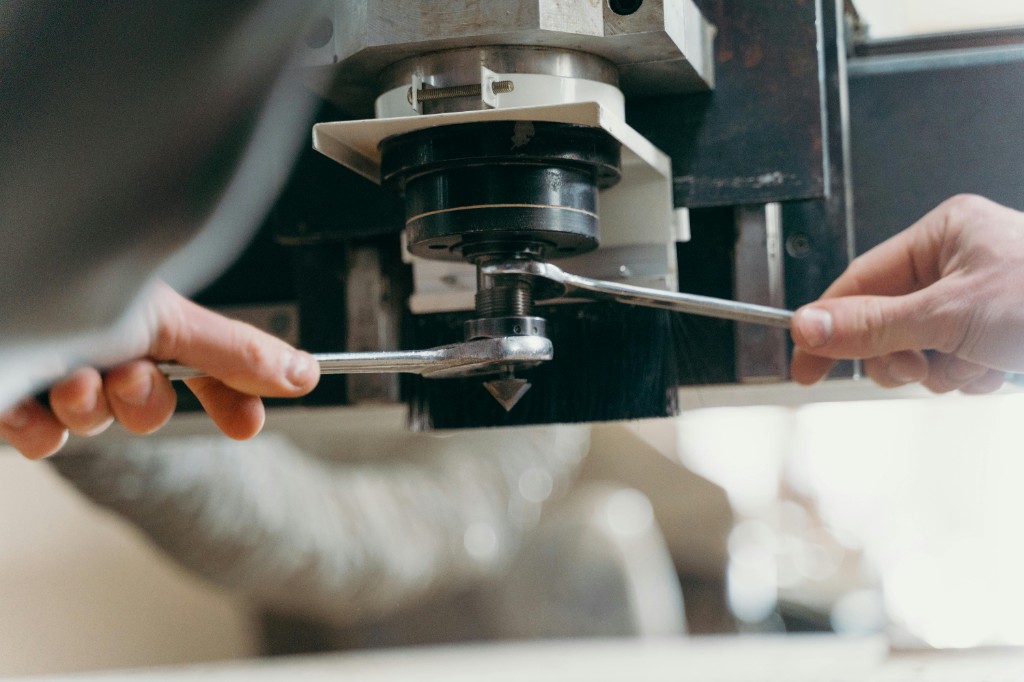
Do you know which investments your company will face in the next 2 to 5 years – and in the longer term?
Investment and financing planning is essential for asset-intensive businesses to secure liquidity, avoid unexpected costs and increase enterprise value – especially with succession planning in mind. Well-planned investments and consistently maintained machinery pay off twice: in day-to-day operations through higher efficiency and later through better resale proceeds.
Investment vs. financing
Investments are the deployment of capital in long-term assets such as machinery, buildings or equipment to generate future income or savings. Financing describes where that capital comes from – equity, bank loans, leasing or grants. Asset-intensive companies tie up a great deal of capital in machinery and buildings and must therefore plan carefully to keep profitability and liquidity in balance. In many businesses, internal financing (profits, depreciation) covers the bulk of investments, while the remainder is often funded through bank loans and other external financing.
Long-term investment planning
For asset-intensive operations, a rolling investment plan over 5–10 years makes sense, structuring acquisitions, replacement investments and modernisation measures. This allows capacity expansion, replacement purchases and rationalisation investments to be coordinated in terms of timing and financing.
Key steps:
- Capture investment requirements (age, condition, failure risk, productivity of machinery, building refurbishments, etc.).
- Assess the economic viability of each investment using static and dynamic methods (e.g. return on investment, net present value, payback period).
- Phase investments according to urgency and strategic importance to preserve liquidity and make optimal use of financing options.
Avoiding unexpected costs
Unforeseen costs often arise from breakdowns, urgent repairs, contractual penalties for late delivery or poorly calculated projects. A systematic approach can significantly reduce these risks.
Starting points:
- A technical risk analysis for each asset (critical components, typical causes of failure, lead times for spare parts).
- Use realistic useful lives and maintenance intervals rather than purely tax-driven depreciation periods.
- Include reserves for maintenance, spare parts and price increases in investment calculations.
- Use insurance and service contracts strategically where failures would pose an existential financial threat.
Maintenance as a value driver
Professionally maintained machinery is not only more reliable – it also achieves significantly better prices on sale or as part of succession planning. Potential buyers pay close attention to documented maintenance, condition and the modernisation level of assets.
Important measures:
- Planned preventive maintenance reduces breakdowns and total lifecycle costs (predictive/preventive maintenance instead of repair-only after damage).
- Complete documentation (maintenance logs, spare parts, software updates, modifications) builds trust and increases demonstrable asset value.
- Technical upgrades such as energy-efficiency improvements, safety retrofits or automation boost productivity and appeal to successors or investors.
Financing solutions for fixed assets
For major investments in machinery and equipment, a mix of internal and external financing is often appropriate. The goal is to enable growth and modernisation without jeopardising liquidity.
Typical forms of financing:
- Classic investment loans with medium- to long-term maturities, fixed interest rates and predictable instalments – aligned with the useful life of the asset.
- Leasing when flexibility and balance-sheet relief are priorities, with ownership usually remaining with the lessor.
- Grants for energy-efficient or environmentally friendly assets that can offer interest advantages or subsidies.
- Using depreciation and divestments (sale of assets no longer needed) to partially self-finance new investments.
Avoiding liquidity bottlenecks
Even with careful planning, short-term liquidity bottlenecks can arise – for example with replacement investments, seasonal fluctuations or delayed customer payments. What is needed then is financing that is quickly available and aligned with actual requirements.
With Kamuno's SME loan, SMEs gain full flexibility – again and again, without submitting a new application each time. The flexible credit line can be requested easily online. Kamuno reviews the application within a few days and informs you of the credit amount granted after review. The credit line is available quickly and straightforwardly; you can draw flexible portions as needed.
Costs are incurred only on the amount of the credit line actually used. This keeps liquidity available whenever you need it – whatever challenge you face.
Find out more or start a non-binding initial assessment:
Request loans for SMEs | KamunoPreparing succession strategically
Companies with sound investment planning and well-maintained machinery generally achieve higher enterprise values on sale or transfer. For successors, not only current earnings matter, but also the modernisation level and the predictability of future investments.
Concrete levers:
- A transparent investment and maintenance plan showing that no major investment shock is looming in the coming years.
- A machinery fleet with traceable remaining useful life, documented maintenance and market-standard technology reduces buyer risk and increases willingness to pay.
- Clearly structured financing (e.g. defined repayment schedules, no short-term expensive loans) facilitates takeover and strengthens your negotiating position.
Those who plan investments consistently, structure financing wisely and maintain assets across their entire lifecycle create stability in day-to-day business and lay the foundation for succession planning that increases value.Barbara Büttner, Büttner Treuhand
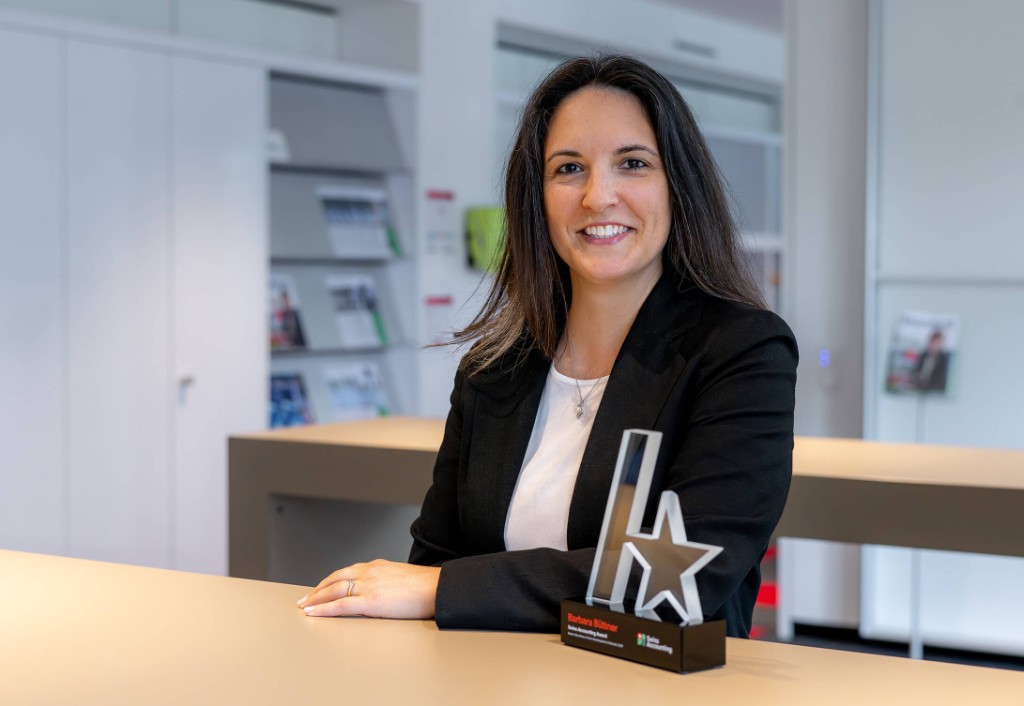
About Barbara Büttner
I was born in Bern and grew up in the Bernese Seeland. I am married and the mother of two children. I began my career with an administrative apprenticeship at a tax authority, followed by numerous further qualifications. I obtained certifications as an HR specialist and finance and accounting specialist, and completed a diploma as an expert in accounting and controlling in 2024. For several years I served as co-managing director of a carpentry business with around 45 employees. For more than 16 years I was responsible for commercial management in my husband's business, gaining extensive experience in corporate management, financial control and people leadership.
Today I work part-time as Head of Finance and HR for a sports facility and am currently supporting a major project worth CHF 41 million. In parallel, I work as an independent trustee, advising companies and private individuals on tax matters, accounting, annual financial statements and social insurance. I also take on interim management assignments when operational or organisational transitions require particular expertise.
Since 2025, my firm Büttner Treuhand has been part of Kamuno's partner network.